Athens' Underground Secrets
Did you know that beneath the bustling streets of Athens lie hidden rivers, secret shelters, and historical marvels waiting to be discovered? Here, we unveil five intriguing underground secrets of the city.
In this article:
- The buried River Ilissos
- Forgotten Vaults and Shelters
- Hadrian’s Reservoir in Kolonaki
- Under the 5* hotel Grande Bretagne
The Athenian Metro: A Free Underground Museum
The buried River Ilissos
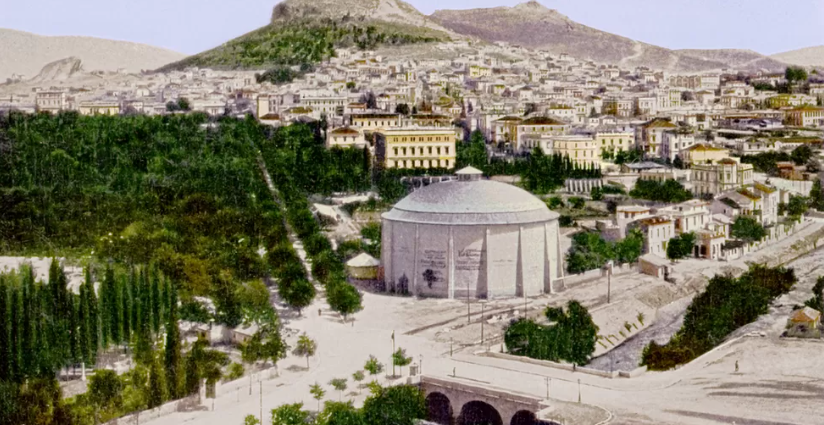
In Athens, there are three rivers: the Kifissos, the Ilissos, and the Iridanos. Have you ever seen them? No? That’s because they flow in concreted channels beneath the city’s surface, buried either from the Roman era or more recently during the city’s postwar car-centered development, in what the daily newspaper Kathimerini has labeled “a crime against the city”.
Once upon a time, these rivers ran openly through the city; they were the lifeblood of Athens, shaping its landscape and nurturing its civilization. Today, they remain hidden from view, overshadowed by the modern metropolis above. Their banks were grassy and shaded by plane trees, considered idyllic in antiquity; they were mentioned by Plato to be the favored place of Socrates for his walks and teaching.
If you trace their hidden paths, you’ll uncover ancient bridges, crumbling aqueducts, and hidden springs, all testament to the enduring legacy of Athens’ rivers.
Forgotten Vaults and Shelters
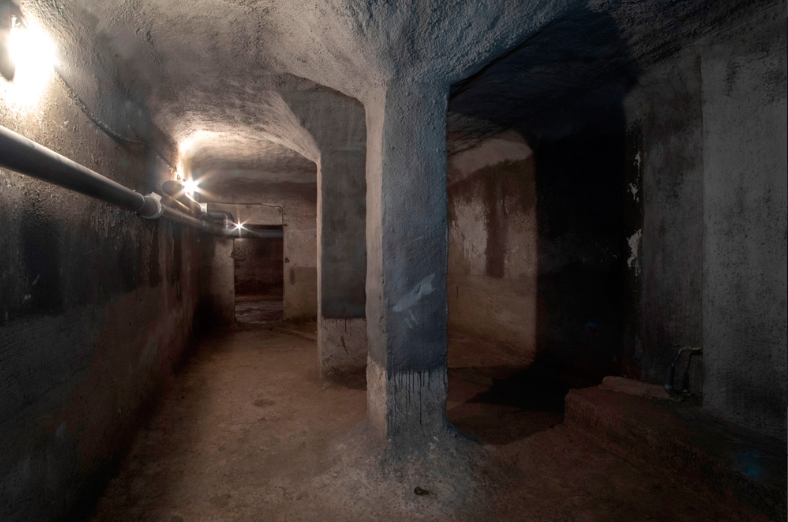
Beneath the vibrant streets of Athens lies another hidden world that few have explored—the world of underground shelters. These shelters, born out of necessity during World War II, stand as a testament to the resilience of the city’s inhabitants amidst wartime chaos.
From serving as protective sanctuaries to housing military bases and even becoming sites of torture, each shelter has its own unique tale to share. Scattered throughout the city, these shelters are everywhere, with the construction of 400 public shelters by the state during the war highlighting the sheer scale of the shelter system.
Among them, a remarkable structure is the huge shelter beneath Lycabettus Hill. Spanning an impressive 500 square meters, this shelter was military and served as the Anti-Aircraft Defence Headquarters, playing a pivotal role in defense operations.
Yet, beyond these official structures, there are believed to be several thousand private shelters scattered throughout Athens to protect civilians (probably around 10 000), as laws mandated their inclusion in new apartment buildings.
If you are ever looking for a unique hotel in Athens, you can stay at “The Vault” and visit their hidden WWII shelter, located right under the hotel’s reception.
Hadrian Reservoir in Kolonaki
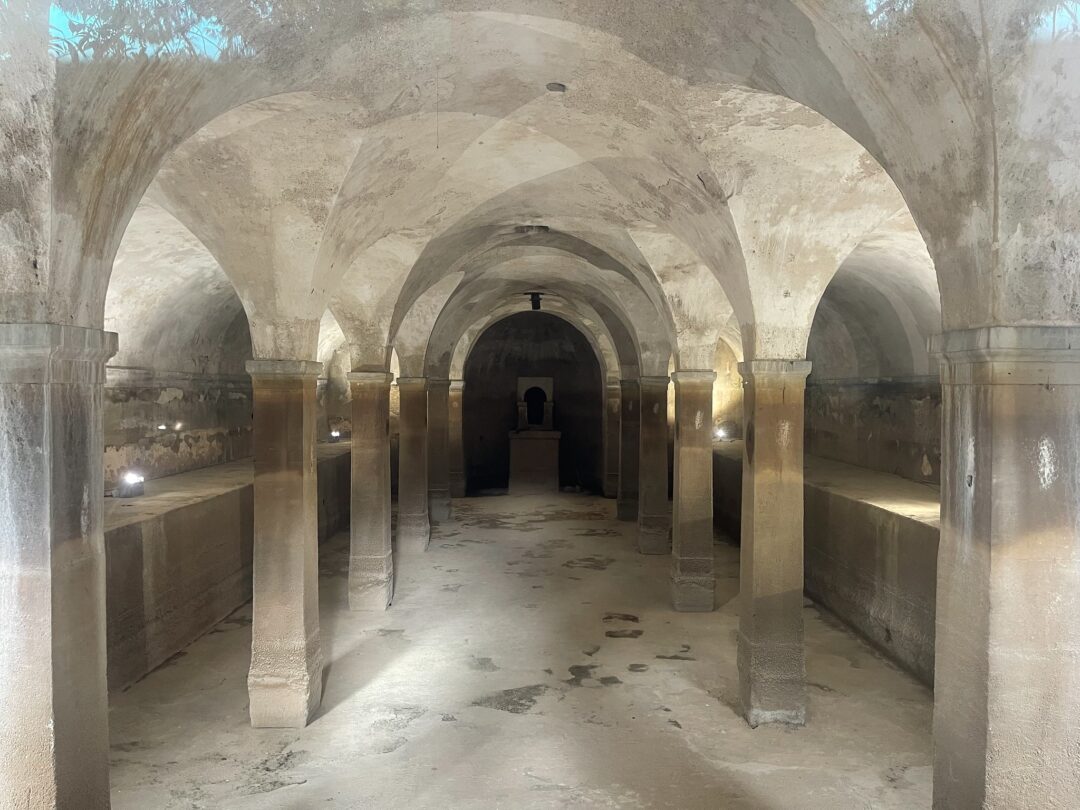
Beneath an outdoor cinema in bustling Kolonaki lies a marvel that dates back nearly 2,000 years, serving as a testament to ancient water management. Constructed in the 2nd century CE, the Roman Emperor Hadrian addressed Athens’ growing water demands with this aqueduct project stretching over 20 kilometers, from Mount Parnitha to Mount Lycabettus. The reservoir sustained the city for over 1000 years.
In 1930, the Hadrian aqueduct ceased to be the main provider of water for the city of Athens, although it continued to work as a supplementary source for many years. Today, while the reservoir is not accessible to the public, you can catch glimpses of it through viewing portals at Dexameni Square (“Reservoir Square”). Remnants of the reservoir are now also displayed in the National Gardens near the Children’s Library.
For those intrigued by its history, you can access the reservoir once a year on January 6th during the annual Greek Orthodox ritual when the “Blessing of the Waters” takes place. Despite the passage of centuries, the reservoir remains remarkably well-preserved, offering a window into ancient engineering and infrastructure.
Under the 5* hotel Grande Bretagne
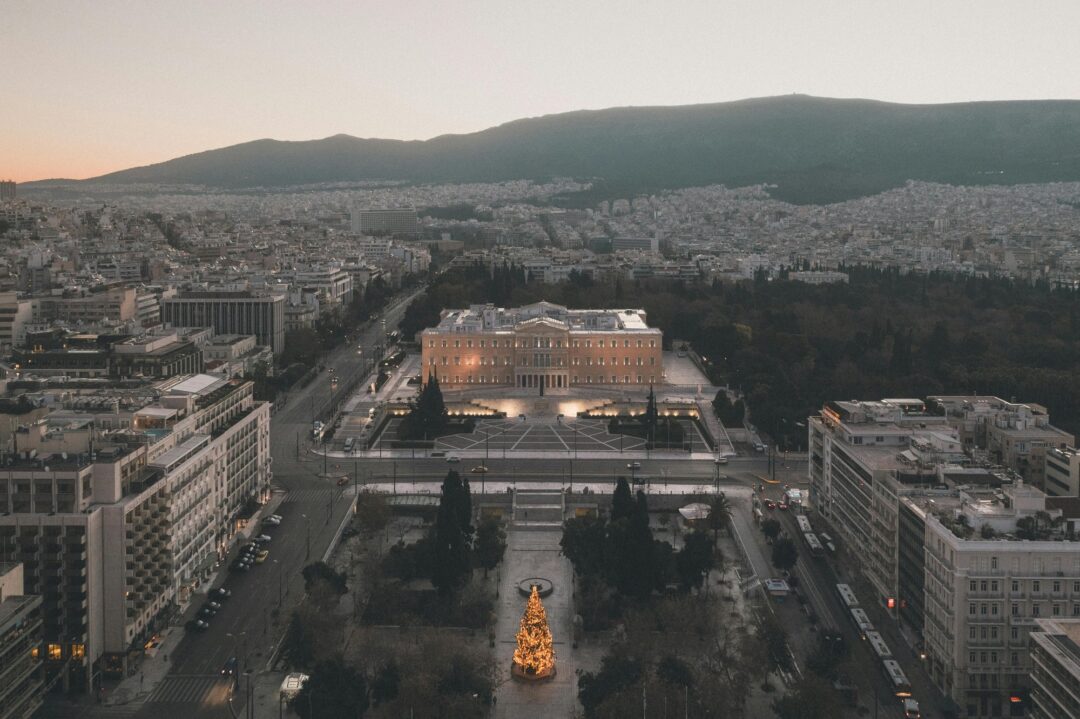
Hidden behind the glamour of Athens’ 5-star Hotel Grande Bretagne on Syntagma Square lie many intriguing stories. During World War II, the hotel served as the Nazi headquarters in Greece, but let’s delve into a lesser-known tale that happened in the sewage of the hotel a few years later.
After the liberation of Athens in 1944, the British established their headquarters in this very hotel and, despite being allies during the war, took aggressive actions against the left in Greece, killing protestors in the streets on the 3rd of December 1944. After weeks of turmoil, a daring resistance operation unfolded on a chilly Christmas evening in 1944.
Now picture this: some men from the resistance (including Manolis Glezos, who took down the Nazi flag from the Acropolis a few years before) sneaking through the city’s sewage system under the hotel, covered in filth. They had one mission in mind: to target the British command inside the hotel. With over a ton of dynamite meticulously placed beneath its foundations, they were about to strike a blow. But something stopped them dead in their tracks: Winston Churchill himself was inside the building! The plan was called off at the last minute, sparing the hotel from a cataclysmic explosion and avoiding an international incident.
-10% JUST FOR YOU
Interested in discovering more tales of rebellion? Join us on the thematic walk “Athens: City of Rebellion”. Enjoy -10% with the code ATHENS10.
The Athenian Metro: A Free Underground Museum
The Athens Metro has earned its place among the top ten subways globally because of the captivating archaeological exhibitions and contemporary art installations awaiting you at many of its stations.
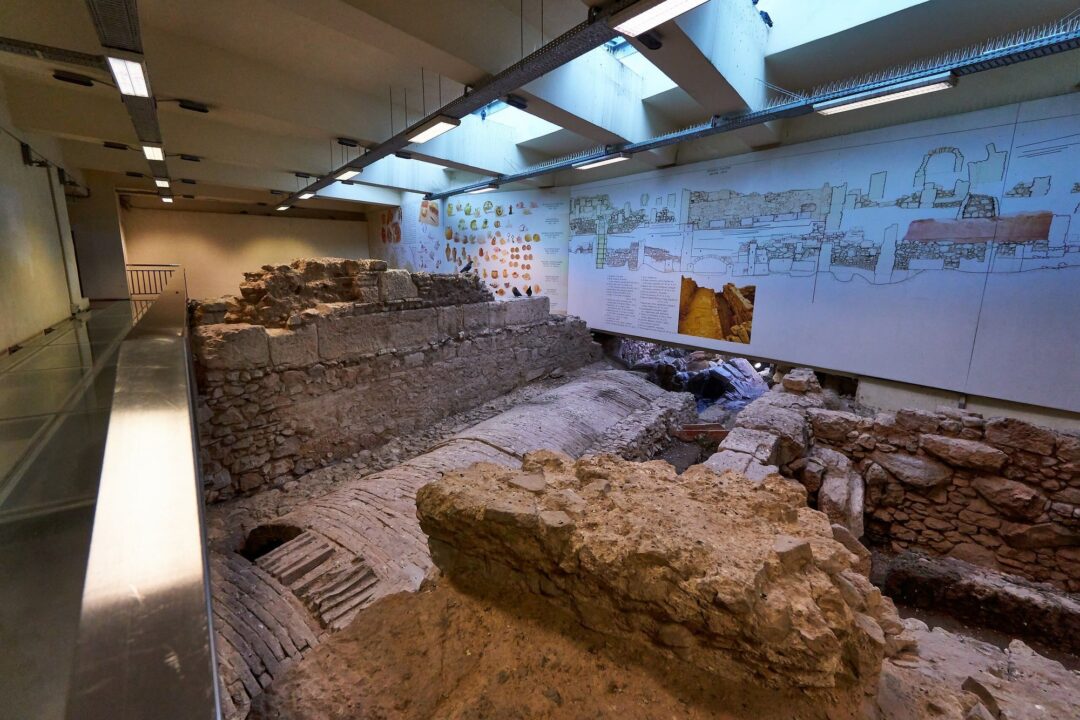
When construction kicked off in 1992, it sparked Greece’s most extensive excavation effort, unearthing over 50,000 artifacts and historical treasures from the city’s vibrant past. At Syntagma Metro Station, you’ll be greeted by ancient relics adorning the main hall—wine amphorae, clay oil lamps, and terracotta water pipes will transport you back in time. Don’t miss the massive archaeological section showcasing city walls, roads, and even a tomb with a 4th-century BC skeleton. At Monastiraki Station, witness the underground bed of the Eridanos River, still flowing through its stone-built channel from the Roman era. At Eleonas Station, take in the remains of Greece’s oldest bridge before moving on to the next stop.
Moreover, the Athens Metro is renowned for its modernity and successful integration of contemporary art, enriching the cultural and aesthetic essence of the Greek capital. Approximately 30 stations boast works by esteemed contemporary artists, fostering a dialogue between the past and present of Greece’s cultural heritage, all awaiting your discovery underground.